Showing posts with label World News. Show all posts
Friday, March 1, 2013

10 IT Skills in the World's Most Wanted

This time I just wanted to give a little information about the work in the IT world 

Information Technology
The first is the results of a survey conducted by the Survey Forecast to 334 IT executives as respondents. The results found that 33% of them plan to recruit new workers in 2013.Areas of expertise that will be most needed are: 


 Programming and Application
 Development
 Project Management
 Help Desk / Technical Support
 Security
 Business Intelligence / Analytics 
 Cloud / SaaS
 Virtualization 
 Networking
 Mobile Applications 
 and Device Management Data Center 

In a different approach, Trainsignal also do the same. The survey was conducted to IT professionals who sits on managerial positions in various global companies.


The data obtained is the need for expertise as follows: 
 Software Development 
 Mobile Development 
 Web Development
 Information Security 
 Cloud / SaaS
 Network Management 
 Service Management
 Virtualization Extract,
 Transform and Load Business Intelligence 
In addition, it's good to also see the information published by Forbes. Although not specifically address the IT world, but pulling data from Forbes show IT as a dominant area of ​​expertise required by the business.

 Here is a list of the ratings given to Forbes: 
 Software Developers (Applications and Systems Software)
 Accountants and Auditors
 Market Research Analysts and Marketing Specialists 
 Computer Systems Analysts 
 Human Resources, Training and Labor Relations Specialists
 Network and Computer Systems Administrators 
 Sales Representatives (Wholesale and Manufacturing,Technical and Scientific)
 Information Security Analysts, Web Developers and Computer Network Architects 
 Mechanical Engineers
 Industrial Engineers 

And where my college now has produced people who are experts in IT wolrld
 STIMIK "AMIKOM" Yogyakarta

Saturday, February 23, 2013

Google Searches for Style (google glasses)


People wearing Google’s glasses are transported to a strange new world in which the Internet is always in their line of sight. But for people looking at the people wearing those glasses, the view is even stranger — someone wearing a computer processor, a battery and a tiny screen on her face.

As Google and other companies begin to build wearable technology like glasses and watches, an industry not known for its fashion sense is facing a new challenge — how to be stylish. Design has always been important to technology, with products like Apple’s becoming fashion statements, but designing hardware that people will wear like jewelry is an entirely different task. 

In a sign of how acute the challenge is for Google, the company is negotiating with Warby Parker, an e-commerce start-up company that sells trendy eyeglasses, to help it design more fashionable frames, according to two people briefed on the negotiations who were not authorized to speak publicly because the partnership has not been made official.
Google and Warby Parker declined to comment.They join other companies that are grappling with these design challenges, including big companies like Apple, Nike and Jawbone and smaller ones like Pebble, MetaWatch and Misfit Wearables.
Jawbone’s health-tracking wristband, Up, for instance, was designed by Yves Behar, the company’s chief creative officer and a well-known designer who has worked with fashion and furniture companies. Apple, which is said to be making a smart watch, has assigned some of its top designers to make curved glass that is comfortable and aesthetically appealing. 

On Wednesday, Google began accepting applications to choose a small group of people to buy an early version of the glasses, called Google Glass. It hopes to sell Glass to the broader public this year, according to two people briefed on the plans.
The frames do not have lenses, though Google is experimenting with adding sunglass or prescription lenses in some versions. They have a tiny screen that appears much bigger from the wearer’s perspective than it does on the frame. Glass wearers can take pictures or record video without using their hands, send the images to friends or post them online, see walking directions, search the Web by voice command and view language translations. 

The glasses reach the Internet through Wi-Fi or Bluetooth, which connects to the wireless service on a user’s cellphone. The glasses respond when a user speaks, touches the frame or moves the head.
For Google, the glasses are a major step toward its dream of what is known as ubiquitous computing — the idea that computers and the Internet will be accessible anywhere and we can ask them to do things without lifting a finger.
The glasses will eventually incorporate several Google products, which could become more useful when they are in front of a user’s eyes rather than on a phone or a computer screen.
For instance, the latest version of the glasses can provide walking and hiking directions from Google Maps, alerts from Google Now about a coming meeting or a traffic jam, and video chats from Google Hangouts. 

In a video released on Wednesday, Google offered ideas about what to do with the glasses. A ballerina could record and stream live video behind the scenes and onstage; a tourist in Thailand could ask Google to translate the word “delicious” while eating noodles on a boat; or a family could video chat over a long distance with a relative on her birthday. 

Other seemingly far-fetched uses are not far off. The glasses could be used to play an augmented reality game in which the real world was annotated with virtual information. Google has such a smartphone app, called Ingress. Users could photograph an object or building and the glasses could identify it, something that is already possible using Google on phones and computers.
Though Google warns of technical bumps as people use the glasses, it has already solved many of the technical challenges. The biggest obstacle now is getting people to use them. 

Though Google employees have been spotted wearing them in the San Francisco Bay Area, they receive strange looks, for example, from a bartender who made fun of his Glass-wearing patrons.
Privacy advocates worry about a day when people wearing glasses could use facial recognition to identify strangers on the street or surreptitiously record and broadcast conversations. On a more mundane level, rude behavior like checking e-mail during conversations would become much easier to hide. 

google glasses

The America of the Arab Street


Why? What happened to the liberal youth of the Arab world in whom we invested our hopes and support? Why are Muslims so sensitive, so easily offended; why do some so readily resort to violence?
The liberal protesters who demanded freedom and democracy last year were able to unite and overthrow dictators in Tunisia and Egypt. But their failure to explain what their liberalism stands for has opened the way for a new, Islamist-oriented power elite that capitalizes on old lies and half-truths to twist religion and history to manipulate the masses. 

The leaders of nascent democracy-oriented political parties in the Arab world’s most politically vibrant country, Egypt, are hobbled by egotistical rivalries, a lack of centralized leadership, urban elitism and an inability to connect with rural majorities. Secular luminaries like Mohamed ElBaradei, former director of the International Atomic Energy Agency, or Naguib Sawiris, a prominent businessman and politician, are not at ease in the new Egypt. As their political parties struggle to articulate a message, Islamist leaders with strong religious credentials have been able to mobilize a broad popular base. 

Arab societies remain deeply religious. In liberal Morocco, 89 percent of the people say that religion is “very important” in their lives, according to a recent Pew poll. Mosques are packed every Friday; religious events promote widespread charity, and believers are encouraged to support candidates who are perceived to be more godly. But there is a deeper problem that goes well beyond the popular appeal of Islamist parties: A cancerous narrative has taken hold of many Arab minds. 

In Egypt, 75 percent of Muslims do not believe that Arabs carried out the 9/11 attacks, according to a 2011 Pew poll. Many believe that it was either Israel, the U.S. government, or both. The West is viewed through a hodgepodge of conspiracy theories, half-truths and a selective reading of history.
When I met Muhammad Mahdi Akef, the influential former leader of the Muslim Brotherhood, in April 2011, he insisted that Al Qaeda was a figment of the Western imagination. The idea that it doesn’t exist, that the United States attacked itself, is buttressed by preachers in mosques, on satellite television channels and in glossy Arabic books. 

The United States and the West are widely seen as waging a war on Muslims. Al Qaeda videos promote this vision as a continuation of the Crusades. Many Muslims recall incidents of perceived hostility in their own lifetime — the wars in Iraq and Afghanistan; the abuses at Abu Ghraib prison and Guantánamo Bay; the banning of minarets in Switzerland; the outlawing of face veils in France; NATO troops burning copies of the Koran in Afghanistan. In this vein, the recent anti-Islam film confirms the belief that the West is out to destroy Islam. 

In most Arab countries, citizens require government permission to produce films. For many Arabs, it is inconceivable that U.S. citizens are not under the same controls. The attacks on U.S. embassies after the release of the offensive video “Innocence of Muslims” on YouTube must be seen in this context.
When I watch Al Jazeera Arabic I am stunned by unchallenged references in talk show interviews to the “American Zionist plan” or “the American enemy” or the “ally of the Zionist entity.” Attacking the United States has become part of the political culture in much of the Middle East. To challenge it is to be a labeled a “sellout,” a “traitor” or a “Zionist agent” and to court social isolation.
And yet on the streets of Arab capitals, McDonald’s, Starbucks and other American brands remain hugely popular — as are American clothes, technology and television shows and films. The same U.S. embassies that were attacked were surrounded almost daily by long lines of people applying for visas to enter the United States. There are almost 50,000 Saudi students in American universities. Tens of thousands more from across the region are vying to do the same. 

On the day that the protests broke out in Egypt and Libya, I was in the Library of Congress in Washington. Founded in 1800, its main reading room has a magnificent dome with dedications to world civilizations — Islamic civilization prominent among them — to which the United States is indebted. A two-volume English translation of the Koran, donated by Thomas Jefferson, is preserved in the library. In 1805, President Jefferson invited the Muslim ambassador from Tunisia to the White House for an iftar meal to break the Ramadan fast.
Today, America’s Muslims are freer and more prosperous than Muslims in any other part of the world. Their daily lives show that the narrative about a U.S.-Islam war is a myth.
The Arab world is at an important crossroads. It is time to abandon this false narrative. Not enough has been done to educate Arab and Muslim religious leaders in the Middle East about the reality of religious freedom in America. Their misunderstanding of liberty leads to their silence — or worse, incitement.
A U.S. invitation to Ali Gomaa, Egypt’s grand mufti, Sheik Ahmed al-Tayyib, grand imam of Al-Azhar, or Saudi Arabia’s popular Sheik Salman al-Awdah as guests of the American people at the president’s State of the Union address in Congress would help demonstrate a different America to young, religious Arabs. These clerics, and others like them, command the support of millions. We can create a new narrative.
The United States can also help by being seen to be a fair arbitrator of the Arab-Israeli conflict. Better relations with some 300 million Arabs strengthens U.S. influence, and helps more than 7 million Israelis, too.
No country has as much soft power at its disposal in the Arab world as does the United States. A new generation of Arabs deserve a better future than following the madness of those who shout “Obama, Obama, we are all Osama.” 

Ed Husain is a senior fellow for Middle Eastern Studies at the Council on Foreign Relations.
“Obama, Obama, we are all Osama” the crowd chanted outside the U.S. Embassy in Cairo on Sept. 11. The slogan also found its way to Tunis, where a mob attacked the embassy as well, and the chant was taken up in Qatar and other Muslim countries. 


Wednesday, February 13, 2013

History of why there is valentine day

1297613277455109443 
In modern times, Valentine's day is dominated by pink hearts and arrows by Cupid. Though the origin of this celebration is very much different from the symbols of love.Valentine actually was a Catholic monk who was martyred. Valentine was sentenced to death by the emperor Claudius II for opposing Roman rule against young love and marriage in a relationship because they are sent to war.

At that time, the glory of the Roman Empire was at the center of the threat of collapse due to deterioration of its officials and civil uprising. In the wild frontier territory, the threat comes from the nation's Gaul, the Huns, Slavs, Mongolia and Turkey. They threatened regions Northern Europe and Asia. Apparently the empire so vast and expanding through conquest has claimed many victims, both from the people of the colony and the Romans themselves. Later they were no longer able to control and manage this vast region.To maintain its empire, Claudius II relentless recruiting Roman men considered still able to fight, as the soldiers prepared to depart to the battlefield. The emperor saw soldiers who have bonds of love and marriage is not a good soldier. Bond of love and inner with family and loved ones will only weaken their fighting power. Therefore, he forbade Roman men love relationship, engaged or married.


Valentine, the young monk saw their suffering is not love which endured until this trauma. They secretly gathered and gained spiritual spray of Valentine. The brothers even gave them the sacrament of marriage. Finally, the action is wafted by the Emperor. Valentine was imprisoned. Because he opposed the rule of the emperor and refused to recognize the Roman gods, he was sentenced to death.In prison, he was best friends with a prison officer named Asterius. This prison guard has a daughter who suffers from blindness since birth. Her name is Julia. Valentine tried to cure his blindness. While treating, Valentine taught history and religion. He describes the world of the universe so that Julia can feel the meaning and kebijaksanannya through the lesson.Julia asks, "Did God really hear our prayers?""Yes, my son. He hears every prayer. ""Do you know what I pray for every morning? I pray that I can see. 

 I want to see the world as you've taught me. ""God does what is best for us, if we believe in Him," said Valentine."Oh, sure. I really believe in him, "said Julia steadily.Then they knelt together and prayed.A few weeks later, she still has not healed. Until it was time for Valentine's death. Valentine did not get to say goodbye to Julia, but he wrote the speech with a message to be closer to God. Not to forget the added the words, "Love from your Valentine" (which eventually became a worldwide expression). He died February 14 269. Valentine Praksedes buried in the Church of Rome.The next day, she received a letter. Upon opening the letter, she could see the letters and colors for the first time seen. Julia cured of his blindness.

In 496, Pope Gelasius I declared February 14 as a day of commemoration St. Valentine.Valentine accidental death date coincides with the celebration of Lupercalia, a celebration in honor of the Roman god of fertility Februata Juno. In this celebration, the Romans did sexual lottery! The trick, they see themselves a name in one container, then take a random name the opposite sex. Name obtained it became his life partner for a year. Then on the next celebration they cast lots again.Apparently the Pope was not comfortable in the way this celebration. For this reason, the church slightly modify this celebration. They include the names of the saints in the box. During the year everyone will imitate the saint was written on the lottery taken. To make the event a little funny, the church also enter the name of Simeon Stylites. The person who took the name of the alias is considered bad luck not lucky, because Simeon spent his life on the pillar, did not move once.Valentine's name then immortalized in this annual festival. In this festival, lovers or married Roman expressing feelings of love and love in the message and reads the letter hand. In mainland Europe is growing tradition by writing the words of love and in the form of cards decorated with hearts and Cupid the god of love to anyone. Or give little attention to the flowers, chocolates and sweets.In modern times, the habit of writing letters by hand is not considered practical. After all, not everyone can weave romantic words. Then came the valentine cards are considered more practical. The first modern Valentine card was sent by Charles nobleman Orleans to his wife, in 1415. When he was imprisoned in the Tower of London. The card is still dipameran in the British Museum. In America, Esther Howland was the first to send a valentine card. Valentine cards were first produced commercially in the 1800s.


Unfortunately from day to day, Valentine perayan have lost the true meaning. The spirit of sacrificial love nd St. Valentine was overcome by lust komesialisasi celebration. For that we need to restore the meaning of this celebration, as in 1 John 4:16: "We have known and believed the love of God to us. God is love, and whoever abides in love, he remains in God and God in him "


source 

Saturday, February 9, 2013

The question puzzles from Albert Einstein


Well, in this post admin wanted to test my friend all ....
This is a puzzle question of Albert Einstein ...

This puzzle contains no tricks, just pure logic.

There are five houses, each of which has a different color. Each house is occupied by one man with a different nationality.

All occupants of the house like a certain type of beverage, smoke a certain brand cigarettes and maintaining a particular type of animal.

None of the five men who drink the same drink, smoke the same brand of cigarettes, and maintain the same animal as the other residents.

QUESTION: Who is the preserve FISH?

HINT:
-The English live in the red house
-The Swedish dog
People liked to drink tea Denmark
White-colored house is located just to the left of the house is brown
White house-dwellers happy to drink coffee
-People who smoke PallMall maintaining bird
-Occupants of houses located in the middle of happy drinking milk
-Residents yellow house smokes Dunhill
-The Norwegian lives in the first house
-The person who smokes Marlboro lives next door who keep cats
-People who keep horses live next to someone who smokes Dunhill
-People who smoke Winfield liked to drink beer
-Next to the blue house lived the Norwegian
-The Germans smoked Rothmans
-People who smoke Marlboro neighbors with people who drink the water.

Albert Einstein formulate this puzzle in the last century.
He stated, 98% of the world population is not able to solve this puzzle.
Do you include the 2%?

How?? Can not??
Tried ya ..!!
If you've tried and know the results, please download answers puzzle Albert Einstein here
Good Work!

Source: @ http://ketikwww.blogspot.com/2012/02/pertanyaan-teka-teki-dari-albert.html # ixzz2KRJbhVs6

Tuesday, February 5, 2013

Foreign Trade and Business in Taiwan

Course summary (Foreign Trade and Business in Taiwan 

Business in Taipei Taiwan. Four Asian Tigers. Electronics, IT, textiles, Semikonduktors, Food, Automobiles, Biotechnology, Drug
Taiwan is one of the most dynamic economies in the world:
- The 17th largest economy in the world global,
- Exporter largest-14
- The 16th largest importer,
- The third largest holder of foreign reserves.
- One of Asia "Four Tigers", along with South Korea, Singapore and Hong Kong

Lack of natural resources and a relatively small domestic market has made Taiwan dependent on foreign trade, which is more than 80% of the GNP.
Services accounted for 68.59% of GDP. The key players in this sector includes wholesale and retail operations (18.49% of GDP), real estate and leasing business (9.08%), financial services and insurance (6.35%), transport and storage (3.10% ), and providers of information and communication (3.67%).

manufacturing accounted for 24.78% of GDP. Essential manufactured goods including IC chips, LCD panels, semiconductors and other electronic components, precision instruments, electrical machinery, mechanical and electrical equipment, textiles, plastics and other petrochemical products, and iron and steel. Taiwan has a competitive advantage in the IT manufacturing industry, it is the second largest IT hardware manufacturing country in the world.
Small and medium enterprises, accounting for nearly 98 percent of all enterprises in Taiwan, plays an important role in the economy of the nation.
Taiwan is located in the heart of the Asia-Pacific region, which puts it in an advantageous position to use the global production resources and markets.

The Taiwanese company the world's largest supplier of computer monitors and leaders in PC manufacturing, final assembly though now many of these products are going abroad, usually in China. Textile and apparel production continues to move to lower-cost overseas locations, but it is still a major sector of industrial exports and employs about 200,000 people.

The United States, Hong Kong and Japan is a buyer for Taiwan products, accounting for 53.3% of total exports. exports of primary products include electrical machinery, mechanical equipment, plastics, textiles and iron and steel.
Taiwan offers a number of advantages for multinational companies and investors over other countries in Asia. As Taiwan's economy has shifted from labor-intensive industries to knowledge-based industries and capital intensive, there are many new investment opportunities in Taiwan. In fact, some of the world's leading high-tech industries are located in Taiwan, and some major industries for potential investments include:
- Semi Conductors
- Opto-Electronics
- Precision Machinery and Instrumentation
- Metal
- Computer and Communication Tools
- Electrical Products
- Aviation and Automotive
- Biomedical and Pharmaceutical
Examples of Foreign Trade and Business in Taiwan:
business in Taiwan
HTC Corp, produces powerful handsets that continues to push the boundaries of innovation to anggotaikan true freedom of movement. Founded in 1997 by Cher Wang, Chairperson, HT Cho, Director of the Board & Chairman of HTC Foundation, and Peter Chou, President and CEO, HTC made its name as the company behind many of operator-branded devices on the market are the most popular. The company has 8948 employees (31/03/2010). HTC is headquartered in Taiwan. Sales and service centers in Europe, America and Asia ensure their ability to service clients and increase customer relationship Looking for New Media. HTC to maintain a presence in all major markets, including the United States, Britain, Germany, Russia, Singapore, Thailand, Philippines, Indonesia, India, Malaysia, Australia, United Arab Emirates (UAE) and Brazil.
Acer Group is a family of four brands : Acer, Gateway, Packard Bell and eMachines. Multi-brand strategy that uniquely allows each brand to offer a unique set of brand characteristics that targets different customer needs in the global PC market. It ranks No. 2 for total PC shipments and No. 2 for notebooks, and has a global workforce of 7,000 employees. 2009 revenues reached U.S. $ 17.9 billion.
On June 29, 2010, Taiwan and mainland China signed the Economic Cooperation Framework JTI (ECFA) to strengthen trade and economic integrity and to effectively reduce the political risk between Taiwan and the mainland for the implementation and anggotasihkan foreign investors' concerns about the uncertainty of cross-strait relations. Taiwan official statistics show that Taiwan companies have invested about $ 84400000000 in China by the end of 2009, more than half of foreign direct investment in Taiwan stocks.
Doing Business, Taiwan, Taiwanese, economy, foreign trade, import, export business in Taiwan, province, China, the world, the Four Tigers, Asia, Business Opportunities 
 source : id.reingex  

Make a PDF file

Often many friends asked an office, how to create PDF documents? probably many who do not know, very often we use the default pdf adobe-reader or Foxit, well, there are several options several software that can be used, but PDFCreator made ​​pdfforge offer easy and practical function. This software last updated June 4, 2012 it was even free.

The way it works, you can simply set up the document you want to create a PDF file. Once ready, you can export it in a way documents are printed via the Print command in the program you are using, and then choose PDFCreator as your printer. Make print settings as required and then. As a result, the document is not printed on paper, but rather to generate a new PDF file format

 .
pdfcreator
PDFCreator

Besides the basic functions to create a PDF, this software also provides features to send the generated PDF file via email, digital signatures in PDF files is to mark you PDF Creator, as well as facilities to encrypt PDF documents not to be opened and printed by anyone . PDF Creator program can be installed on Windows XP, Windows Vista, or Windows 7. Installation file size about 18 MB.

PDFCreator advantage of pdfforge:
PDFCreator allows you to create PDF document files directly from any program you use, as long as this program provides features for document printing. This software is free, it can replace programs such as Adobe PDF (Acrobat) is purely commercial.

Disadvantages:
The program has an intuitive interface is not available as in other Windows programs. Note also the font that you use, it is probably not render fonts properly.

To try it please download it Here

Good Luck : 

Tuesday, February 28, 2012

Pendiri Twitter Sebut Twitter Tidak Sehat


AP
Warning: Twitter co-founder Christopher Stone said the website was designed to be dipped in and out of


KOMPAS.com - Pernyataan mengejutkan dilontarkan oleh Co-Founder Twitter Christopher 'Biz' Stone. Menurutnya, jangan menghabiskan waktu berjam-jam dalam menggunakan situs Twitter karena tidak menyehatkan.

Sebaliknya, Stone menyuruh sekitar 500 juta pengguna Twitter untuk melakukan hal positif lainnya serta menemukan apa yang mereka inginkan di tempat lain.

Berdasarkan risetnya, pengguna Twitter cenderung kecanduan (adiktif) dalam mengakses salah satu situs jejaring sosial paling berpengaruh di dunia itu.
Bahkan ada beberapa pengguna yang mengakses situs tersebut selama 12 jam nonstop dalam sebuah kesempatan.

Pada konferensi di Montreal, Stone yang merupakan salah satu dari empat pria yang menciptakan Twitter pada 2006 silam ini menganggap bahwa Twitter justru banyak disalahgunakan oleh penggunanya.

"Bagi saya, kedengarannya tidak menyehatkan," jelasnya.

Memang, Stone mengaku senang apabila penggunanya terlibat aktif di Twitter. Apalagi pengguna tersebut menemukan sesuatu yang dicarinya dan bisa belajar sesuatu dari Twitter tersebut.

"Saya pikir itu adalah keterlibatan lebih sehat. Jelas kami ingin agar Anda datang lebih sering ke Twitter, yang memiliki sekitar 30 juta pengguna di Inggris serta memungkinkan pengiriman pesan singkat tidak lebih dari 140 karakter untuk dilihat orang lain secara online," tambahnya.

Di antara selebriti pertama yang menggunakan situs Twitter adalah Stephen Fry yang melakukan tweet foto dirinya saat ia terjebak di lift pada 2009.

Padahal, Stone sempat berpikir bahwa situs Twitter yang dibuatnya dulu adalah produk yang gagal dan malah terkesan tidak berguna.

"Tidak ada yang berpikir itu adalah ide yang baik," katanya.

Terungkap, iPhone dan iPad Dirakit Secara "Hand Made"


KOMPAS.com - Acara "Nightline" episode khusus tentang lini produksi perangkat Apple di stasiun televisi ABC, menyajikan tayangan yang mengejutkan banyak pihak.

Tayangan acara tersebut memperlihatkan sebuah fakta yang sangat mengejutkan, ternyata ponsel besutan Apple, iPhone dibikin tidak sepenuhnya dirakit dengan mesin.

iPhone dan iPad bisa disebut produk yang dirakit dengan tangan atau "hand-made", meski tidak 100%. Karena, ada 141 langkah lini produksi yang sebagian besar melibatkan tangan pekerja secara langsung. Sedangkan iPad, membutuhkan 325 langkah produksi yang juga melibatkan tangan pekerja.

Di dalam pabrik perakitan milik Foxconn itu, tak banyak terlihat ada robot atau mesin otomatis yang membantu proses pembuatan dua produk andalan Apple tersebut.

Pihak Apple mengizinkan wartawan ABC Bill Weir, untuk masuk ke pabrik Foxconn di China yang memproduksi produk-produk Apple. Dari kunjungan tersebut, Weir membuat sebuah tayangan berdurasi 30 menit.

Sehari sebelum tayangan itu disiarkan, Weir mengatakan ABC akan menunjukkan bagaimana cara iPad, iPhone, dan MacBook dibuat. Weir akan bertemu buruh-buruh China yang membuatnya.

  Pekerja Foxconn sedang merakit iPad 
 "Kami akan menunjukkan bagaimana para pekerja datang dengan bus, kadang butuh berhari-hari untuk sampai ke Foxconn. Sangat menyedihkan ketika mereka harus membersihkan layar atau menyolder chip selama 10 jam sehari dengan bayaran minim," kata Weir.

Motivasi ABC melakukan liputan khusus di pabrik Foxconn, dipicu atas pemberitaan mengenai kondisi pekerja Foxconn yang dieksploitasi, karena buruknya kesehatan, kondisi keamanan dan jam kerja yang panjang.

Sebelumnya, ada juga pemberitaan soal pekerja Foxconn yang bunuh diri dan dua ledakan tahun 2011 yang menewaskan empat orang dan melukai lebih dari 75 pekerja lainnya.

Menanggapi pemberitaan tersebut, Apple mengumumkan akan melakukan inspeksi dan audit fasilitas di pabrik Foxconn. Inspeksi akan dilakukan oleh organisasi independen bernama Fair Labor Association (FLA), dan telah dimulai pada pertengahan Februari 2012.

Seorang eksekutif Foxconn mengatakan, pihaknya akan menyambut tuntutan Apple untuk menaikkan upah para pekerja.

Untuk urusan makan, meski telah bekerja keras dan hanya digaji 1,78 dollar AS (atau sekitar Rp 16 ribu) per jamnya, para pekerja Foxconn harus membayar makanan mereka sendiri, sekitar 0,7 dollar AS (sekitar Rp 6500) sekali makan, dan membayar 17,50 dollar AS (sekitar Rp 160.000) sebulan untuk berbagi kamar asrama bersama lima sampai tujuh  pekerja lainnya.

Foxconn sendiri, saat ini merupakan pabrik manufaktur teknologi yang menyuplai perusahaan teknologi seperti HP, Microsoft, IBM, Intel, dan Dell.

Tuesday, February 21, 2012

Ponsel dan Tablet Samsung yang Kebagian Android 4.0


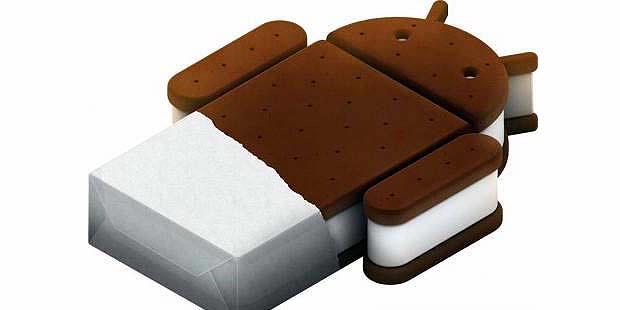
Android 4.0 Ice Cream Sandwich


KOMPAS.com - Sejumlah ponsel besutan Samsung dikabarkan akan mendapatkan Android 4.0 (Ice Cream Sandwich) pada tahun ini. Pemberian update ssitem operasi tersebut sesuai dengan keinginan pengguna seiring dengan popularitas pengguna perangkat Android.

Samsung merupakan vendor pertama yang memanfaatkan Android Ice Cream Sandwich pada perangkatnya yaitu Galaxy Nexus dan Nexus S.

Selanjutnya, Samsung juga dikabarkan akan memberi update Android versi terbaru ini ke beberapa perangkat buatannya, meski tidak disebutkan waktu pasti dalam perilisannya.

Seperti yang dikutip dari situs Android and Me, berikut daftar ponsel Samsung yang mendapat update dan tidak mendapat update Ice Cream Sandwich:

Perangkat Samsung yang telah mendapat Android 4.0:

- Samsung Galaxy Nexus (Global Version)
- Samsung Galaxy Nexus LTE
- Samsung Nexus S (di kuartal I-2012)
- Samsung Galaxy Tab 2 (belum dirilis)

Perangkat Samsung yang akan mendapat Android 4.0 di kuartal I-2012:

- Samsung Galaxy Note
- Samsung Galaxy S II

Perangkat Samsung yang akan mendapat Android 4.0, tetapi tanggal belum dipastikan:

- Samsung Nexus S 4G (kemungkinan kuartal I-2012)
- Samsung Galaxy Note (AT&T)
- Samsung Galaxy S II (T-Mobile)
- Samsung Galaxy S II, Epic 4G Touch
- Samsung Galaxy S II (AT&T)
- Samsung Galaxy S II Skyrocket
- Samsung Galaxy S II Skyrocket HD
- Samsung Galaxy R
- Samsung Galaxy Tab 10.1
- Samsung Galaxy Tab 8.9
- Samsung Galaxy Tab 7.7
- Samsung Galaxy Tab 7.7 LTE
- Samsung Galaxy Tab 7.0 Plus

Perangkat Samsung yang tidak akan mendapat Android 4.0:

- Samsung Galaxy S
- Samsung Galaxy S Captivate
- Samsung Galaxy S Fascinate
- Samsung Galaxy S Vibrant
- Samsung Galaxy Tab 7

Klungbot, Robot Pemain Angklung made in indonesia

  YUNANTO WIJIUTOMO Klunbot, robot pemain angklung.

KOMPAS.com — Bayangkan kalau angklung bisa dimainkan oleh satu orang saja, pasti memainkan angklung takkan serumit yang dibayangkan selama ini. Kita pun tak harus datang ke pentas musik angklung untuk menikmati indahnya suara alat musik yang baru saja menjadi warisan budaya dunia ini.
Usaha untuk membuat memainkan dan mendengarkan angklung jadi gampang. Inilah yang dilakukan oleh Karismanto Rahmandika, siswa SMP Negeri 14, Bandung, dan Krisna Diastama yang merupakan siswa SD Islam Ibnu Sina, Bandung. Kedua siswa penggemar sains itu menciptakan klungbot, robot pemain angklung. Robot yang pastinya hanya berjumlah satu ini akan menggantikan pemain angklung yang jumlahnya berjibun.
Dalam menciptakan robot pemain angklung ini, Krisna menggunakan robot Lego Mindstorm. Untuk membuat si robot bekerja, ia menerjemahkan nada-nada musikal menjadi bahasa program. Ia melakukannya dengan perangkat lunak LeJOS yang biasa digunakan untuk Lego. Bahasa program inilah yang kemudian diterima oleh bagian penerjemah pesan yang terhubung lewat Bluetooth dan selanjutnya ke penggerak.
Ide untul menciptakan klungbot didapatkan ketika ia melihat pertunjukan angklung. Ia berkomentar, betapa rumitnya memainkan angklung itu, butuh sangat banyak orang dan koordinasi yang rumit sehingga ketukan dan nadanya pas. Dengan menggunakan klungbot, musik angklung bisa dinikmati dengan mudah dan tanpa proses yang rumit untuk memainkannya.
Selain menciptakan alat yang diikutkan dalam National Young Inventor Awards di Lembaga Ilmu Pengetahuan Indonesia ini, Krisna juga menciptakan robot pemain alat musik berbahan botol yang diisi air dan robot pemain drum. Kedua alat musik itu juga dapat dimainkan bersamaan dengan angklung sehingga bisa memproduksi suara bak musik simfoni. Hingga kini, Krisna telah membuat beberapa lagu daerah yang sudah siap dimainkan dengan klungbot, seperti "Burung Kakak Tua".

Saturday, February 18, 2012

Helikopter NATO Jatuh di Afghanistan, 3 Orang Tewas


Kabul Sebuah helikopter yang digunakan oleh pasukan NATO jatuh dan terbakar di wilayah Afghanistan. Insiden tersebut menewaskan 3 orang. Belum diketahui identitas ketiga korban tersebut.

"Tiga orang tewas dalam insiden jatuhnya helikopter sipil di distrik Nad Ali, dekat Shora," terang seorang pejabat keamanan setempat kepada kantor berita AFP, Senin (16/1/2012).

Namun sayangnya, tidak dijelaskan lebih lanjut soal jati diri maupun kewarganegaraan ketiga orang tersebut.

Sempat muncul klaim dari militan Taliban bahwa mereka telah menembak jatuh helikopter tersebut. Tapi otoritas setempat menyebutkan, helikopter tersebut jatuh karena masalah teknis.

"Jatuh karena ada masalah pada mesinnya," tutur juru bicara Provinsi Helmand, Daud Ahmadi.

Secara terpisah, juru bicara International Security Assistance Force (ISAF) NATO, menegaskan bahwa helikopter tersebut milik perusahaan sipil bernama AAR Airlift, yang bermarkas di Amerika Serikat. Helikopter tersebut disewa oleh NATO untuk mengangkut pasokan logistik bagi pasukannya di Afghanistan.

 
Pratama Master powered by blogger.com
Design by Simple Diamond and Pratama Master